
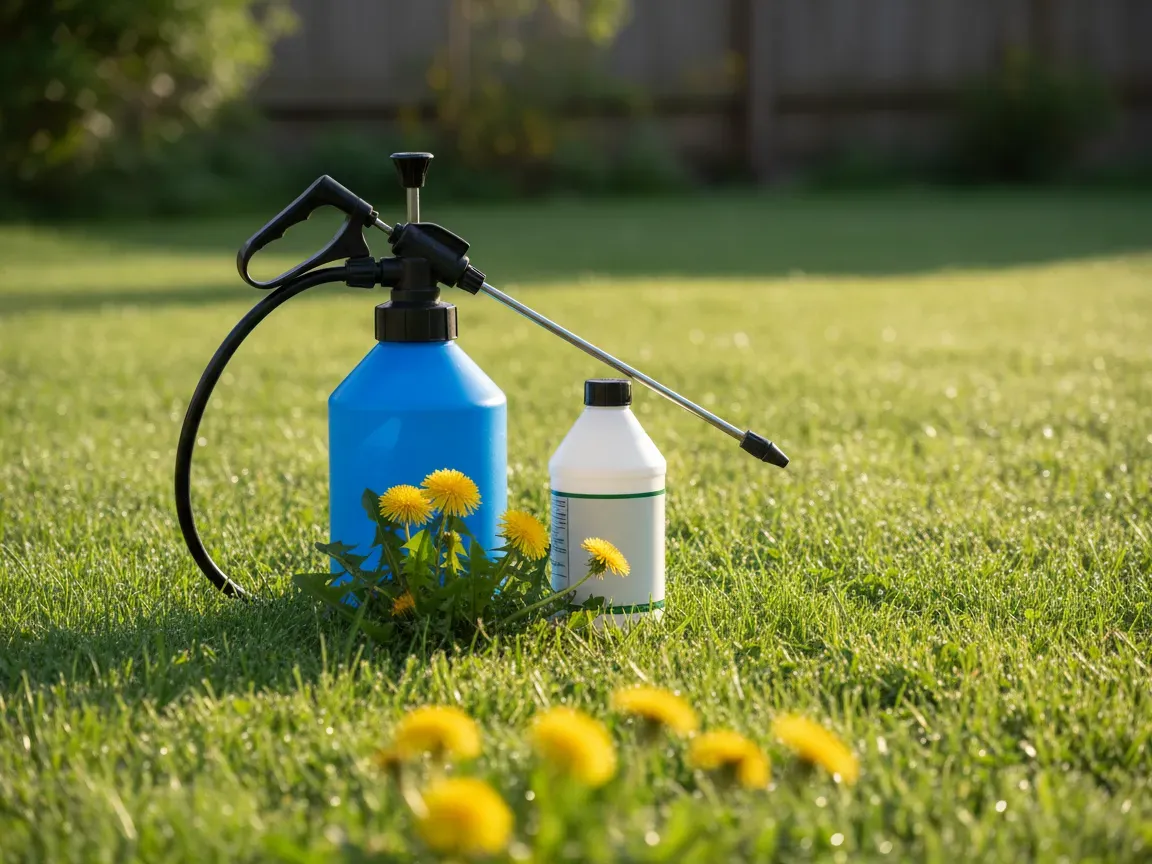

Walking down the garden aisle at your local hardware store can feel overwhelming. Shelves are stacked with dozens of brightly colored jugs, each claiming to wipe out weeds instantly while keeping your property pristine. Grabbing the first bottle that catches your eye is an easy way to kill your prized Kentucky bluegrass or leave stubborn dandelions completely untouched.
Getting weed control right comes down to understanding what is in the container and how it interacts with your yard. Once you learn how to read past the marketing promises, you can walk into any home improvement center with total confidence.
Why Reading the Herbicide Label Beats Relying on Bottle Color?
Packaging designers know exactly how to grab your attention. Bright green bottles suggest lawn safety, while dark red or black containers often hint at heavy-duty power. These color choices are marketing strategies, not scientific categories. Two bottles sitting side by side might feature identical packaging color palettes yet contain chemical compounds with opposite effects on your grass.
The back label is where the real story lives. Federal law requires manufacturers to list active ingredients, precise application rates, target weed species, and specific turf varieties safe for treatment. A quick look at the fine print tells you whether a product works on cool-season grasses like fescue or warm-season varieties like Bermuda.
Skipping this step often leads to over-application, damaged soil, or accidental runoff into neighborhood storm drains.
Selective vs. Non-Selective: What Protects Your Turf?
The most critical distinction you need to make at the shelf is between selective and non-selective herbicides. Making the wrong choice here can turn a lush front yard into a sea of dead brown patches within forty-eight hours.
Selective herbicides are formulated to target specific plant categories while leaving others unharmed. Most commonly, these products target broadleaf weeds like clover, chickweed, and plantain without killing the surrounding turfgrass. When applied at proper temperatures and mixing ratios, selective formulas allow you to treat your entire lawn without causing collateral damage.
Non-selective herbicides do not discriminate. They kill or injure almost any green plant tissue they touch, from crabgrass and wild violets to your prized turf and ornamental shrubs. These products belong along gravel driveways, fence lines, sidewalk cracks, or garden beds undergoing total renovation. Never spray a non-selective formula across an established lawn unless you plan on re-seeding the entire yard from scratch.
Pre-Emergent vs. Post-Emergent: When Should You Spray?
Timing dictates success in weed management just as much as chemistry. Products fall into two distinct operational windows based on the life cycle of the weeds you want to control.
Pre-emergent herbicides stop weed seeds from successfully developing. They create a chemical barrier in the top inch of soil that interrupts root and shoot development as seeds germinate. These products do not kill established plants. If you already see mature crabgrass or spurge in your lawn, applying a pre-emergent will not eliminate them. Pre-emergents are strictly preventative, requiring precise application in early spring or early fall before soil temperatures reach critical germination thresholds.
Post-emergent herbicides attack weeds that are actively growing above the surface. These chemicals absorb through the leaf cuticle and travel through the plant vascular system to shut down vital processes. They work best when weeds are young, actively photosynthesizing, and not under severe drought stress.
To keep things running smoothly, match your timing to the problem:
- Use pre-emergents in early spring when Forsythia blooms to block summer annuals.
- Apply pre-emergents in late summer or early fall to prevent winter annuals like poa annua.
- Spot-treat with post-emergents during calm, warm days when target weeds are actively pushing new leaves.
- Avoid applying post-emergents right before heavy rain, as water washes the chemical off foliage before absorption.
Key Active Ingredients to Look for in the Lawn Care Aisle
Instead of memorizing brand names, flip the container over and scan the active ingredients section near the bottom of the front or back panel. A handful of reliable compounds handle the vast majority of residential yard problems.
For broadleaf weeds in turf, look for combinations containing 2,4-D, dicamba, and mecoprop (MCPP). This classic three-way blend tackles everything from clover to dandelions without harming standard turfgrass varieties. If you deal with tougher creeping weeds like wild violet or ground ivy, search for products containing triclopyr, which penetrates waxy leaves more effectively.
When dealing with total vegetation clearing in driveways or paver patios, glyphosate remains the standard non-selective systemic ingredient. For organic or contact-only burn-down in mulched areas, look for pelargonic acid or concentrated vinegar solutions, though these usually only kill top growth on young weeds without reaching deep taproots.
Essential Application Gear and Safety Tips Before You Spray
Picking the right jug is only half the battle. How you deliver the liquid to the plant determines whether you get professional results or ruined landscaping.
Relying on pre-attached hose-end sprayers can be risky because they often deliver inconsistent dilution rates and large droplets that drift on windy days. A dedicated pump-up tank sprayer offers far better control. Look for a sprayer with an adjustable brass or poly nozzle that lets you switch between a coarse fan spray for broad coverage and a tight stream for spot treatments.
Always prepare your safety gear before opening a container:
- Chemical-resistant nitrile gloves to prevent dermal absorption during mixing.
- Protective eyewear with side shields to guard against accidental splashes.
- Long pants and closed-toe footwear that keep spray mist off your skin.
- A dedicated plastic measuring cup marked in ounces that stays with your yard tools.
Never mix chemicals indoors or near wellheads, and always spray during early morning hours when wind speeds are lowest to prevent drift onto neighboring plants.
How to Build Your Hardware Store Shopping Checklist?
Walking into the hardware store with a written plan saves money and keeps you from buying unnecessary chemicals. Take five minutes to inspect your property before you drive to the store so you know exactly what your lawn needs.
Start by identifying the weed you want to eliminate. Note whether it is grassy or broadleaf, and count how many spots need treatment. If you only have ten dandelions scattered across the yard, a ready-to-use spot spray bottle makes far more sense than buying concentrated jugs and specialized equipment. For widespread infestations, purchasing a concentrate and mixing it in a tank sprayer saves significant money over the season.
Check your calendar and recent weather trends. If soil temperatures have already climbed past sixty degrees, put the crabgrass pre-emergent back on the shelf and pivot toward post-emergent options. Finally, verify your turf species so you can double-check the label compatibility while standing in the aisle.
Matching the Chemical to Your Long-Term Lawn Goals
Taking the guesswork out of herbicide selection protects your investment in your yard and saves hours of frustration. When you understand the basic distinctions between selective controls, broad-spectrum clearers, and seasonal barriers, you stop relying on colorful marketing and start managing your lawn with genuine purpose.
A healthy lawn requires targeted treatment rather than blanket spraying. Every bottle on that hardware store shelf is a tool built for a specific situation, and picking the right one comes down to reading the label, checking your calendar, and respecting the life cycle of the weeds you want to remove. Your turf will look far better for it, and your wallet will thank you for buying only what you actually need.